
Circuit Breaker Amperage Guide: Understanding Breaker Sizes and Ratings
Choosing the correct circuit breaker amperage is essential for protecting electrical wiring, equipment, and appliances from overloads and short circuits. Whether you're replacing an existing breaker, upgrading an electrical panel, or planning a new installation, understanding breaker amp ratings helps ensure safety, performance, and code compliance.
This guide explains the most common circuit breaker sizes, how amperage ratings work, and how to select the right breaker for your electrical application.
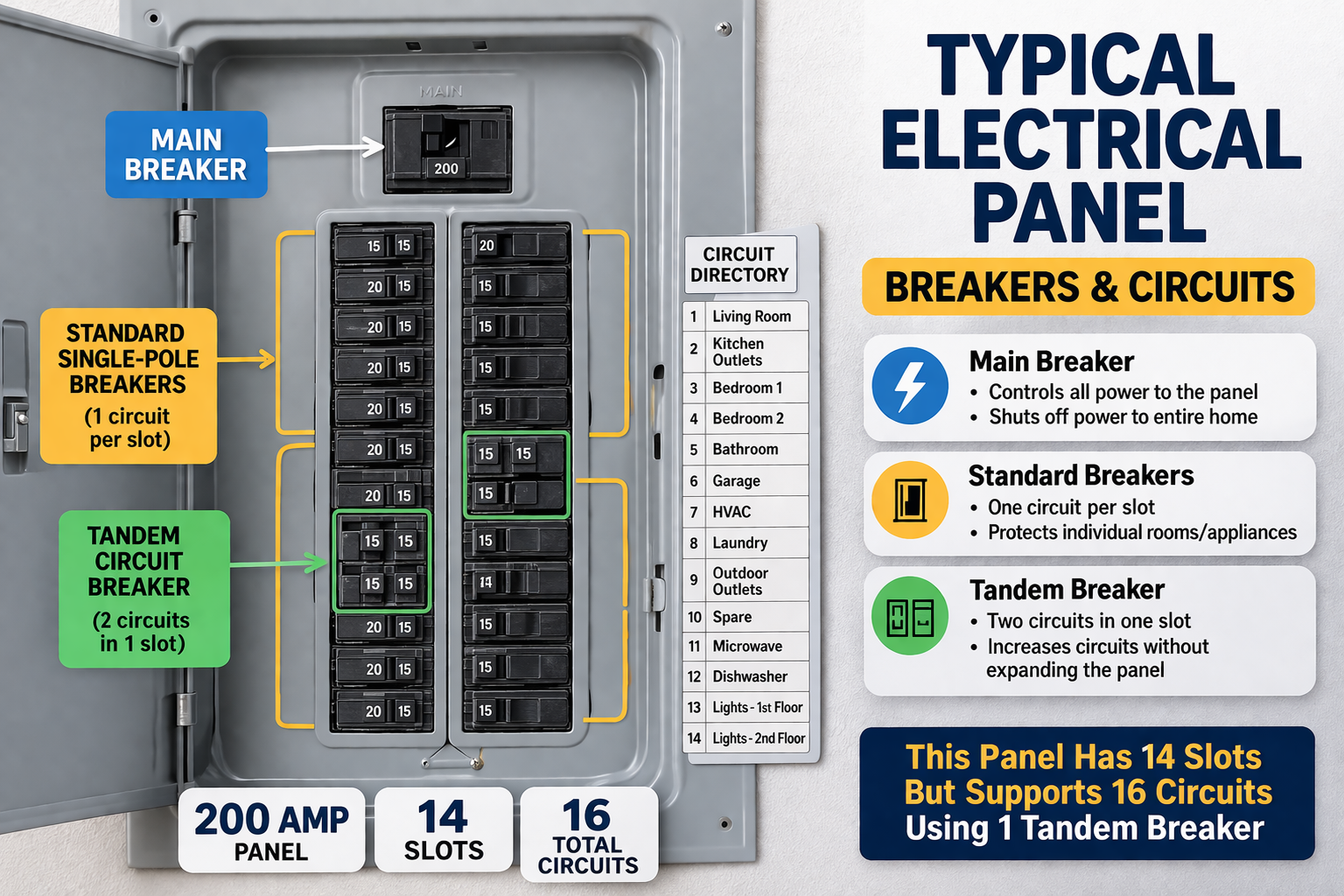 What Does Circuit Breaker Amperage Mean?
A circuit breaker's amperage rating indicates the maximum amount of electrical current the breaker can safely carry before tripping. When electrical current exceeds the breaker's rated capacity, the breaker automatically disconnects power to help prevent overheating, equipment damage, and electrical fires.
Common residential and commercial breaker sizes range from 15 amps to several hundred amps depending on the application.
15 Amp Circuit Breakers
15 amp breakers are commonly used for standard lighting circuits, bedrooms, living rooms, and general-purpose receptacles in residential applications.
These breakers typically protect 14-gauge copper wiring and are among the most frequently installed breakers in homes.
20 Amp Circuit Breakers
20 amp breakers are commonly used for kitchens, bathrooms, garages, laundry rooms, and other circuits where higher electrical loads are expected.
These breakers typically require 12-gauge copper wiring and provide additional capacity compared to 15 amp circuits.
30 Amp Circuit Breakers
30 amp breakers are often used for larger appliances and dedicated circuits, including:
- Electric dryers
- Water heaters
- Small HVAC equipment
- Specialized electrical equipment
These circuits commonly operate at 240 volts and require appropriately sized conductors.
40 Amp Circuit Breakers
40 amp breakers are frequently used for electric ranges, cooktops, HVAC systems, and larger residential electrical loads.
They are commonly found in both residential and light commercial installations.
50 Amp Circuit Breakers
50 amp breakers are often installed for:
- Electric vehicle chargers
- Large HVAC systems
- Hot tubs and spas
- Welders
- Subpanels
As electric vehicle adoption continues to grow, 50 amp breakers have become increasingly common in residential applications.
60 Amp Circuit Breakers
60 amp breakers are frequently used for subpanels, larger HVAC systems, commercial equipment, and specialized electrical installations requiring additional capacity.
They provide a reliable solution when greater electrical demand exceeds standard residential circuit requirements.
100 Amp Circuit Breakers
100 amp breakers are commonly used as service disconnects, feeder breakers, and subpanel protection devices.
Many older homes still operate on 100 amp electrical service, although modern homes often require larger capacities.
200 Amp Electrical Service
Today, 200 amp service is considered the standard for most new residential construction. A 200 amp electrical panel provides sufficient capacity for modern appliances, HVAC systems, home offices, electric vehicle chargers, and future electrical expansion.
Many homeowners upgrade older 100 amp panels to 200 amp service to accommodate increasing electrical demands.
Learn more in our guide on When to Upgrade Your Electrical Panel.
How to Determine What Size Breaker You Need
Several factors influence the proper breaker size for a circuit:
- Electrical load requirements
- Wire size and conductor type
- Voltage requirements
- Continuous versus intermittent loads
- Equipment manufacturer specifications
- Local electrical code requirements
Installing an oversized breaker can create safety hazards, while undersized breakers may trip unnecessarily.
For additional guidance, visit our How to Choose the Right Circuit Breaker resource.
Common Circuit Breaker Types Available
In addition to different amperage ratings, breakers are available in several configurations:
- Single-pole breakers
- Double-pole breakers
- Tandem circuit breakers
- GFCI circuit breakers
- AFCI circuit breakers
- Commercial and industrial breakers
Each breaker type serves a specific purpose depending on the electrical application.
Learn more about Tandem Circuit Breakers and GFCI Circuit Breakers.
Replacing Circuit Breakers
If a breaker is damaged, repeatedly tripping, or no longer functioning properly, replacement may be necessary. It is important to select a replacement breaker with the correct amperage rating and panel compatibility.
Read our complete Circuit Breaker Replacement Guide for additional information.
Finding Circuit Breakers in San Diego
Electrical Supplies Unlimited carries a large inventory of new, used, surplus, and obsolete circuit breakers in a wide range of amperages and configurations. We stock products from many leading manufacturers including Siemens, Square D, Eaton, Cutler Hammer, General Electric, Federal Pacific (FPE), Challenger, Pushmatic, and more.
Whether you need a 15 amp residential breaker or a large commercial power distribution breaker, our experienced team can help you locate the correct solution.