
Tandem Circuit Breakers: What They Are and When to Use Them
A tandem circuit breaker is a special type of breaker that allows two separate circuits to be installed in a single slot within an electrical panel. These breakers are often used when a panel runs out of space but additional circuits are needed.
Understanding how tandem breakers work, when they are allowed, and whether they are safe is essential for homeowners, electricians, and contractors working with residential electrical systems.
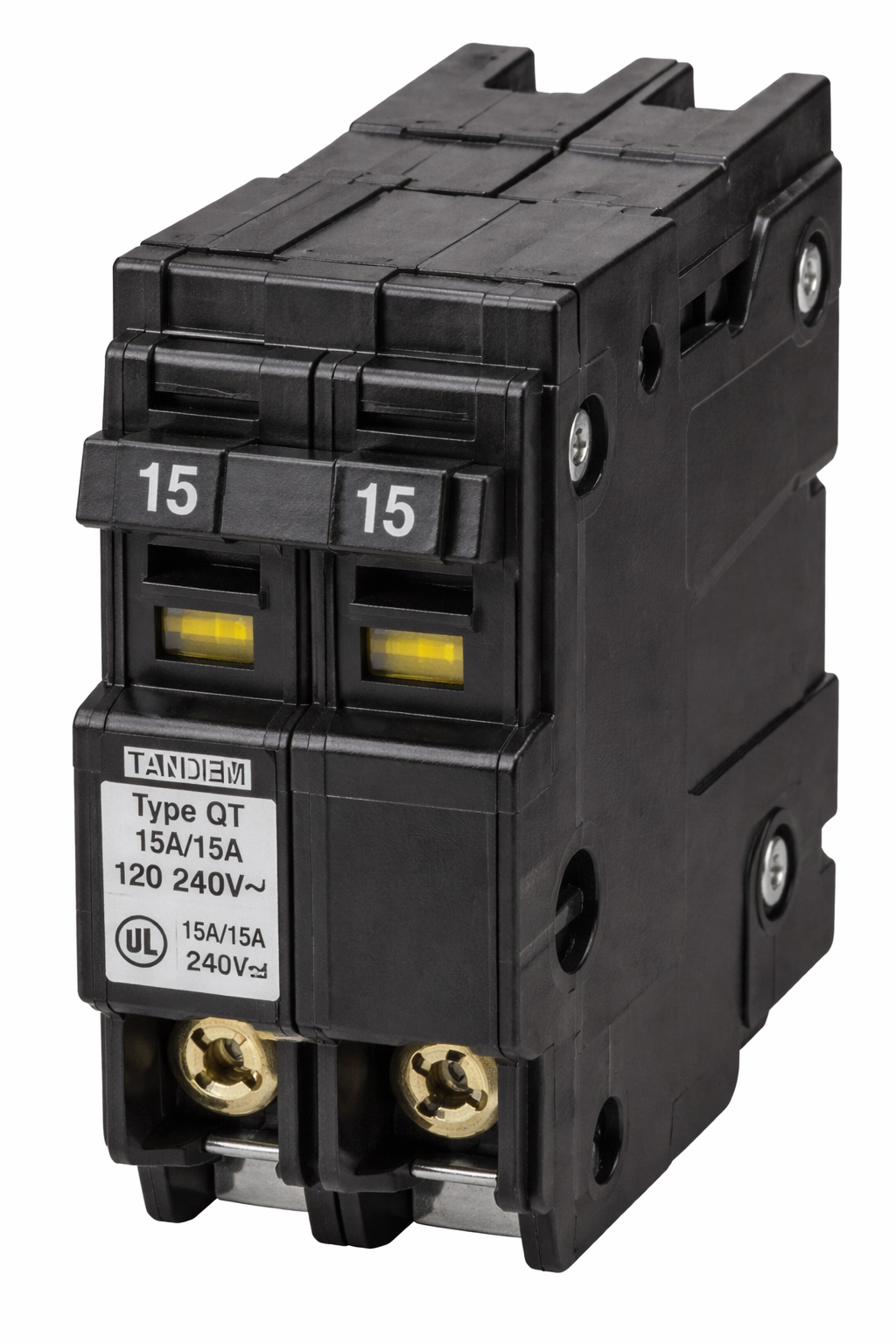 What Is a Tandem Circuit Breaker?
A tandem circuit breaker (sometimes called a “double” or “cheater” breaker) combines two individual breakers into one unit that fits into a single panel slot. Each circuit operates independently, providing the same protection as a standard single-pole breaker.
This allows an electrical panel to support more circuits without physically expanding the panel.
When Are Tandem Breakers Used?
Tandem breakers are typically used when an electrical panel has no available space for additional circuits. Common situations include:
- Home renovations or additions
- Installing new appliances or equipment
- Adding circuits for kitchens, garages, or HVAC systems
- Upgrading electrical capacity without replacing the panel
They provide a convenient solution when space is limited, but they are not always the best long-term option.
Are Tandem Circuit Breakers Safe?
Yes, tandem circuit breakers are safe when used correctly and installed in panels that are specifically designed to accept them. Electrical panels have a maximum number of circuits they can safely handle, and tandem breakers should only be used within those limits.
Installing tandem breakers in a panel that is not rated for them can lead to overheating, code violations, and potential electrical hazards.
Are Tandem Breakers Legal?
Tandem breakers are legal when used in accordance with the panel manufacturer’s specifications and local electrical codes. Most panels include labeling that indicates how many tandem breakers are allowed and in which positions they can be installed.
If too many circuits are added beyond the panel’s rating, it may be necessary to upgrade the panel instead.
Tandem Breaker vs Standard Breaker
Understanding the difference between tandem and standard breakers is important when planning electrical upgrades:
- Standard Breaker: Occupies one slot and controls one circuit
- Tandem Breaker: Occupies one slot but controls two separate circuits
While tandem breakers increase circuit capacity, they do not increase the total electrical load capacity of the panel.
Tandem Breakers vs Double-Pole Breakers
Tandem breakers are sometimes confused with double-pole breakers, but they serve different purposes:
- Tandem Breaker: Two independent 120V circuits
- Double-Pole Breaker: One 240V circuit for large appliances
Using the correct type of breaker is critical for proper electrical system function.
When You Should Upgrade Your Electrical Panel
If you find yourself needing multiple tandem breakers to add circuits, it may be a sign that your panel is undersized for your electrical needs. In these cases, upgrading to a larger panel may be the safer and more reliable solution.
Learn more about upgrade costs in our guide to circuit breaker panel upgrade cost.
Choosing the Right Circuit Breaker
Selecting the correct breaker for your panel ensures safe and reliable operation. Breakers must be compatible with your panel brand and rated for the correct electrical load.
For more guidance, visit our How to Choose the Right Circuit Breaker guide.
Explore More Circuit Breaker Resources
For additional information on breaker types, troubleshooting, and electrical safety, visit our Circuit Breaker Resource Hub.