
How Many Breakers Can Be in a Panel?
One of the most common questions homeowners and contractors ask is how many breakers can be in a panel. The answer depends on the panel’s design, electrical capacity, and manufacturer specifications—not just the physical number of breaker slots.
Understanding breaker limits is important for maintaining a safe electrical system and avoiding overloaded panels or code violations.
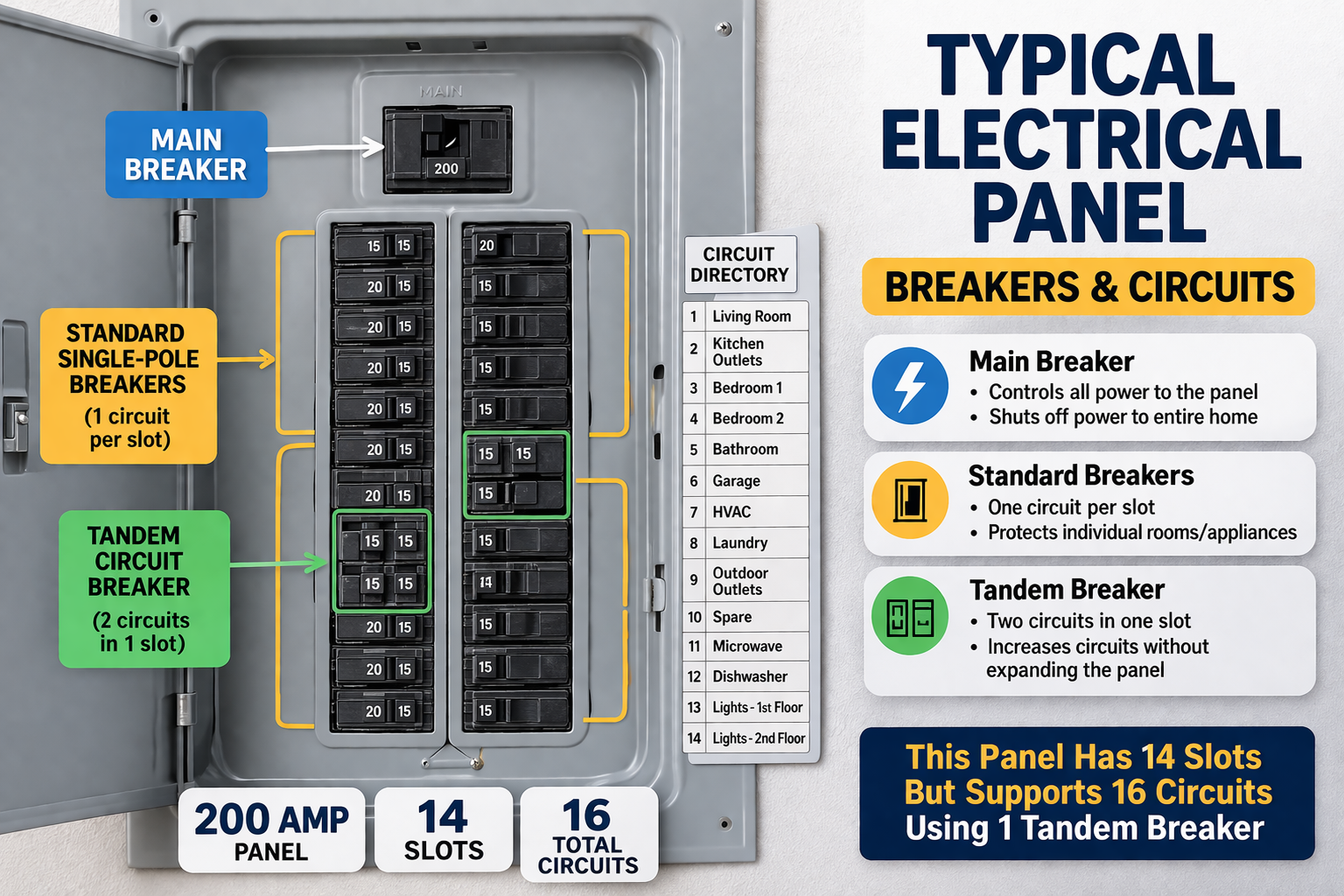 Breaker Limits Are Based on Panel Rating
Every electrical panel is designed with a maximum number of circuits it can safely support. This limit is determined by the panel manufacturer and is clearly listed on the panel label.
For example, a panel may be rated for 20, 30, or 40 circuits depending on its size and configuration. Even if additional breakers physically fit, exceeding the rated number of circuits can create safety risks.
What Is the Difference Between Slots and Circuits?
It’s important to understand the difference between breaker slots and circuits:
- Slots: Physical spaces in the panel for breakers
- Circuits: Individual electrical lines protected by breakers
Some panels allow more circuits than slots by using tandem circuit breakers, which fit two circuits into a single slot.
Using Tandem Breakers to Add Circuits
Tandem breakers can increase the number of circuits in a panel without expanding its size. However, they are only allowed in panels that are specifically designed to accept them.
Installing tandem breakers in the wrong panel or exceeding the allowed number of circuits can lead to overheating, code violations, and potential electrical hazards.
Learn more about how these work in our guide to tandem circuit breakers.
Typical Breaker Capacity by Panel Size
While exact limits vary by manufacturer, here are common examples:
- 100-amp panel: typically 20–30 circuits
- 150-amp panel: typically 30–40 circuits
- 200-amp panel: typically 40–60 circuits
Always refer to the panel label to confirm the exact circuit limit for your system.
What Happens If You Exceed Panel Capacity?
Adding too many breakers beyond the panel’s rating can result in:
- Overheating of the electrical panel
- Increased risk of electrical fires
- Code violations during inspections
- Unreliable circuit performance
If your panel is already at capacity, adding more circuits without upgrading the panel is not recommended.
When to Upgrade Your Electrical Panel
If you need more circuits than your panel allows, it may be time for an upgrade. This is especially common during:
- Home remodels or additions
- Installing new appliances or HVAC systems
- Adding EV chargers or solar systems
- Replacing outdated electrical panels
Upgrading your panel provides more capacity and improves overall electrical safety.
Learn more about costs in our guide to circuit breaker panel upgrade cost.
Choosing the Right Circuit Breakers
Using the correct breaker type and brand is essential for maintaining safe operation. Breakers must be compatible with your panel and rated for the correct electrical load.
For more guidance, visit our How to Choose the Right Circuit Breaker guide.
Explore More Circuit Breaker Resources
To learn more about breaker types, troubleshooting, and electrical safety, visit our Circuit Breaker Resource Hub.