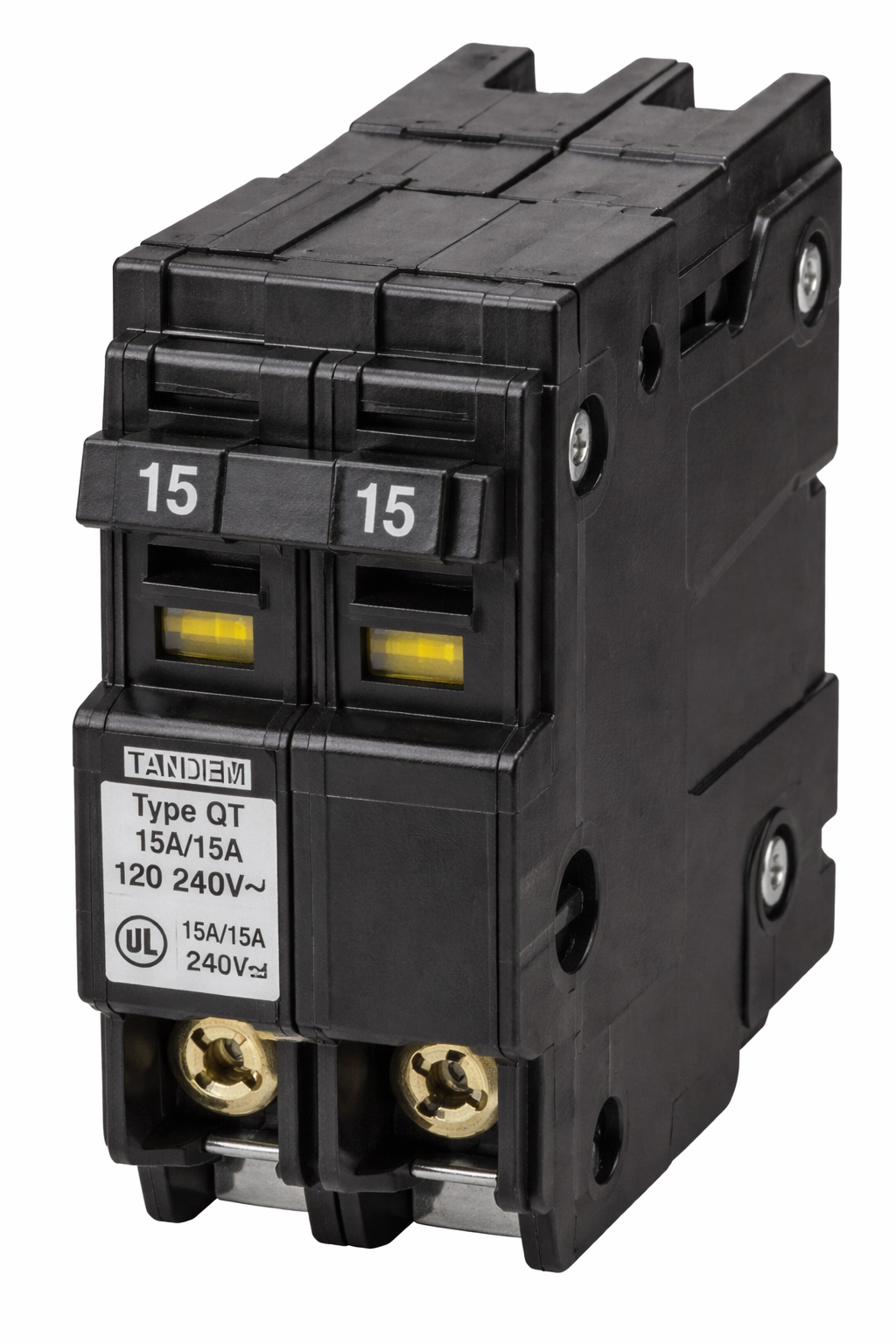
We Buy Circuit Breakers in San Diego

Do you have surplus, used, obsolete, or excess circuit breakers taking up valuable warehouse, jobsite, or storage space? Electrical Supplies Unlimited (ESU) buys circuit breakers in San Diego from electricians, contractors, facility managers, property management companies, manufacturers, and individuals. We purchase single breakers, excess inventory, discontinued electrical equipment, and entire electrical stockrooms.

If you're looking to sell circuit breakers in San Diego, our experienced team can help identify your equipment and provide a fair market evaluation. We buy circuit breakers from many leading manufacturers including Siemens, Square D, Eaton, Cutler Hammer, General Electric (GE), Federal Pacific (FPE), Challenger, Zinsco, Bryant, Pushmatic, and many others.

We Buy Circuit Breakers San DiegoWhat Circuit Breakers Does ESU Buy?

We purchase a wide variety of electrical equipment including:

  • Used circuit breakers
  • New surplus circuit breakers
  • Obsolete circuit breakers
  • Discontinued breaker inventory
  • Molded case circuit breakers
  • Bolt-on circuit breakers
  • Industrial circuit breakers
  • Commercial circuit breakers
  • Residential circuit breakers
  • Panelboard breakers

Whether you have a few breakers or an entire warehouse of electrical inventory, ESU can help.

We Buy Cutler Hammer Breakers San Diego

ESU is actively interested in purchasing Cutler Hammer breakers in San Diego. We regularly buy Cutler Hammer 20 amp, 30 amp, 50 amp, 100 amp, and larger commercial and industrial breakers. We are especially interested in surplus inventory, discontinued models, and hard-to-find Cutler Hammer circuit breakers.

If you have excess Eaton or Cutler Hammer inventory, contact us for a competitive offer.

Who Sells Circuit Breakers to ESU?

We purchase electrical equipment from a wide range of sources throughout Southern California:

  • Electrical contractors
  • Commercial electricians
  • Industrial facilities
  • Property managers
  • Electrical distributors
  • Construction companies
  • Government agencies
  • Homeowners

Whether you're liquidating inventory, cleaning out a warehouse, completing a project, or replacing obsolete equipment, ESU can help turn unused electrical inventory into cash.

We Buy More Than Circuit Breakers

Sell Circuit Breakers San Diego

In addition to buying circuit breakers, ESU purchases:

  • Transformers
  • Electrical panels
  • Disconnects
  • Switchgear
  • Motor controls
  • Fuses
  • Relays
  • Electrical distribution equipment

Learn more about our inventory on our Circuit Breakers San Diego page.

Why Sell Your Circuit Breakers to ESU?

With over 40 years of experience in the electrical supply industry, ESU has become one of San Diego's trusted buyers and sellers of electrical equipment. We make the process simple, professional, and efficient.

  • Fast inventory evaluations
  • Competitive offers
  • Knowledgeable staff
  • Purchasing of large and small quantities
  • Local San Diego company
  • Over 40 years in business

We specialize in purchasing obsolete circuit breakers and hard-to-find circuit breakers that many suppliers no longer handle.

Sell Circuit Breakers in San Diego Today

If you have excess electrical inventory, unused breakers, surplus stock, or discontinued electrical equipment, contact Electrical Supplies Unlimited today. We are always interested in purchasing quality electrical equipment and circuit breakers throughout San Diego County.

Call 858-558-2850 to discuss your inventory and receive a no-obligation evaluation.

More Circuit Breaker Resources

Obsolete Circuit Breakers: Finding Replacement Breakers for Older Electrical Panels

Finding obsolete circuit breakers can be challenging, especially when dealing with older electrical panels that are no longer manufactured. Many homes, commercial buildings, and industrial facilities still rely on discontinued breaker systems, making replacement parts difficult to locate through traditional electrical supply channels.

Fortunately, many obsolete circuit breakers are still available through specialty electrical suppliers. Understanding your options can help you maintain electrical safety, avoid costly downtime, and extend the life of your electrical system.

Obsolete circuit breakers and discontinued electrical panel breakersWhat Are Obsolete Circuit Breakers?

Obsolete circuit breakers are breakers that are no longer manufactured by the original company. Although production may have ended years ago, many of these breakers remain in service throughout homes, office buildings, apartment complexes, manufacturing facilities, and commercial properties.

In many cases, replacement breakers are still available as new surplus, reconditioned, or professionally tested used inventory.

Common Obsolete Circuit Breaker Brands

Some of the most frequently requested obsolete circuit breaker brands include:

  • Federal Pacific (FPE)
  • Zinsco
  • Challenger
  • Pushmatic
  • Bulldog
  • Bryant
  • Westinghouse
  • Sylvania
  • ITE Legacy Models
  • Crouse-Hinds

Many of these systems were installed decades ago and continue operating today, creating ongoing demand for replacement breakers and panel components.

Why Obsolete Breakers Are Still Needed

Replacing an entire electrical panel is not always practical or immediately necessary. Property owners often seek obsolete breakers when:

  • A single breaker has failed
  • Additional circuits are needed
  • A tenant improvement project is underway
  • Equipment maintenance requires breaker replacement
  • A matching breaker is required for an existing panel

Locating the correct replacement breaker can often save significant time and expense compared to a complete panel replacement.

Federal Pacific (FPE) Breakers

Federal Pacific Electric (FPE) breakers are among the most commonly requested obsolete circuit breakers. While many FPE panels remain in service, replacement breakers can be difficult to locate through standard electrical distributors.

Property owners frequently search for replacement FPE Stab-Lok breakers when maintaining older electrical systems.

Learn more in our guide on Replacing FPE, Zinsco, and Challenger Breakers.

Zinsco Circuit Breakers

Zinsco electrical panels were widely installed throughout the United States and are still found in many older residential and commercial properties. Because original Zinsco equipment is no longer manufactured, replacement breakers often require sourcing from specialty electrical suppliers.

Electrical contractors frequently encounter Zinsco systems during remodeling, panel upgrades, and electrical inspections.

Challenger Circuit Breakers

Challenger breakers remain common in many buildings constructed during the 1980s and 1990s. While some Challenger products were later absorbed into other product lines, finding exact replacement breakers often requires access to surplus or obsolete inventory.

Many electricians seek Challenger replacements when repairing existing electrical systems or upgrading service equipment.

When Should an Obsolete Breaker Be Replaced?

Circuit breakers should be replaced whenever they show signs of failure or damage. Common warning signs include:

  • Frequent tripping
  • Burn marks or discoloration
  • Overheating
  • Physical damage
  • Breaker will not reset
  • Loose connection to the panel

If you notice any of these symptoms, review our guide on Signs of a Bad Circuit Breaker.

Should You Replace the Breaker or Upgrade the Entire Panel?

In some situations, replacing a single obsolete breaker is the most practical solution. In others, a complete electrical panel upgrade may offer greater safety, capacity, and long-term reliability.

Factors to consider include:

  • Age of the electrical panel
  • Availability of replacement breakers
  • Current electrical demand
  • Future expansion plans
  • Overall condition of the system

Learn more in our guide on When to Upgrade Your Electrical Panel.

Finding Obsolete Circuit Breakers in San Diego

Electrical Supplies Unlimited specializes in locating new, used, surplus, and obsolete circuit breakers throughout San Diego County. Our inventory includes hard-to-find breakers, discontinued models, legacy panel components, and replacement electrical equipment for residential, commercial, and industrial applications.

We help contractors, electricians, property managers, and facility maintenance professionals locate difficult-to-find breakers quickly and efficiently.

Why Choose ESU for Obsolete Circuit Breakers?

With over 40 years of experience serving the electrical industry, ESU has built a reputation as one of San Diego's trusted sources for obsolete electrical equipment. Our extensive inventory and product knowledge allow us to help customers locate replacement breakers that many suppliers no longer carry.

Whether you need a discontinued FPE breaker, Zinsco replacement, Challenger breaker, or another hard-to-find model, our team can help identify the correct solution.

More Circuit Breaker Resources

Circuit Breaker Identification Guide

Proper circuit breaker identification is essential when replacing a faulty breaker, upgrading an electrical panel, or locating a hard-to-find replacement. Many circuit breakers look similar, but differences in manufacturer, amperage, voltage rating, and panel compatibility can make selecting the correct replacement challenging.

This Circuit Breaker Identification Guide will help homeowners, electricians, contractors, and facility managers identify circuit breakers and locate compatible replacement breakers for residential, commercial, and industrial electrical systems.

Circuit Breaker Identification GuideWhy Circuit Breaker Identification Matters

Installing the wrong breaker can create safety hazards, cause nuisance tripping, or damage electrical equipment. Before replacing a breaker, it is important to identify:

  • Manufacturer and brand
  • Breaker model number
  • Amperage rating
  • Voltage rating
  • Breaker type
  • Panel compatibility

Correct identification helps ensure safe operation and compliance with electrical codes.

Step 1: Identify the Breaker Manufacturer

The first step is determining who manufactured the breaker. Most breakers have the manufacturer's name printed on the handle, side label, or front face.

Common circuit breaker manufacturers include:

  • Square D
  • Siemens
  • Cutler Hammer / Eaton
  • General Electric (GE)
  • Federal Pacific (FPE)
  • Zinsco
  • Challenger
  • Bryant
  • Pushmatic
  • Westinghouse

If the label is damaged or missing, a qualified electrical supplier may still be able to identify the breaker based on its physical design.

Step 2: Locate the Amperage Rating

The breaker amperage is usually displayed prominently on the breaker handle.

Common breaker sizes include:

  • 15 Amp
  • 20 Amp
  • 30 Amp
  • 40 Amp
  • 50 Amp
  • 60 Amp
  • 100 Amp
  • 200 Amp

Learn more in our Circuit Breaker Amperage Guide.

Step 3: Determine the Breaker Type

Several breaker styles are commonly used in residential and commercial electrical systems.

  • Single-Pole Breakers
  • Double-Pole Breakers
  • Tandem Circuit Breakers
  • GFCI Circuit Breakers
  • AFCI Circuit Breakers
  • Bolt-On Circuit Breakers
  • Molded Case Circuit Breakers

Identifying the breaker type is often necessary before purchasing a replacement.

Learn more about Tandem Circuit Breakers and GFCI Circuit Breakers.

Step 4: Check the Model Number

Most breakers include a manufacturer part number or catalog number printed on the side or rear label. This number is often the easiest way to locate an exact replacement breaker.

Examples may include:

  • QO120
  • QO220
  • QP120
  • BR120
  • THQL1120

Having the model number available can greatly speed up the identification process.

Identifying Obsolete Circuit Breakers

Many older electrical systems still contain obsolete breakers that are no longer manufactured. These breakers often require specialized sourcing through surplus and obsolete electrical suppliers.

Some of the most commonly requested obsolete breakers include:

  • Federal Pacific (FPE)
  • Zinsco
  • Challenger
  • Pushmatic
  • Bryant
  • Bulldog

Learn more on our Obsolete Circuit Breakers page.

How to Identify a Replacement Circuit Breaker

When searching for a replacement breaker, compare the following:

  • Manufacturer
  • Model number
  • Amperage rating
  • Voltage rating
  • Physical dimensions
  • Panel compatibility

Many breakers may appear similar but are not approved for use in the same electrical panel.

Visit our Circuit Breaker Compatibility Guide for more information.

Hard-to-Find Circuit Breakers in San Diego

Electrical Supplies Unlimited specializes in identifying and sourcing hard-to-find circuit breakers in San Diego. Our inventory includes new, used, surplus, and obsolete breakers from many leading manufacturers.

Whether you're looking for a discontinued breaker, replacement panel component, or obsolete electrical equipment, our experienced staff can often help locate the correct part.

Visit our Hard to Find Circuit Breakers San Diego page to learn more.

Need Help Identifying a Circuit Breaker?

If you're unsure which breaker you have, bring your breaker into Electrical Supplies Unlimited or contact our team. We can often identify difficult-to-read model numbers, obsolete breakers, and compatible replacement options.

With over 40 years of experience, ESU is one of San Diego's trusted sources for circuit breakers, transformers, electrical panels, and hard-to-find electrical equipment.

More Circuit Breaker Resources

Circuit Breaker Replacement Guide

Knowing when and how to perform a circuit breaker replacement is important for maintaining a safe and reliable electrical system. Whether you are replacing a faulty breaker, upgrading an older electrical panel, or installing new equipment, choosing the correct replacement breaker helps protect wiring, appliances, and electrical devices from overloads and short circuits.

This guide explains common signs of breaker failure, how to identify the correct replacement, and important factors to consider before installing a new circuit breaker.

Circuit breaker replacement and electrical panel upgradeWhen Should a Circuit Breaker Be Replaced?

Circuit breakers are designed to last for many years, but they can eventually wear out or become damaged. A breaker that no longer functions properly may fail to trip during an overload, creating a serious safety hazard.

Common signs that indicate a breaker may need replacement include frequent tripping, burning odors near the panel, visible damage, overheating, or a breaker that will not reset.

If you are experiencing these issues, read our guide on Signs of a Bad Circuit Breaker.

Step 1: Identify the Cause of the Problem

Before replacing a breaker, it is important to determine whether the breaker itself is defective or if another electrical issue is causing the problem.

Overloaded circuits, short circuits, damaged wiring, and faulty appliances can all cause breakers to trip. Simply replacing the breaker without correcting the underlying issue may not solve the problem.

Step 2: Verify Panel Compatibility

Not all circuit breakers are interchangeable. Replacement breakers must be compatible with the specific electrical panel in which they are installed.

Major panel and breaker manufacturers include Siemens, Square D, Eaton, Cutler Hammer, General Electric (GE), Federal Pacific (FPE), Challenger, Pushmatic, and Zinsco. Always verify compatibility before purchasing a replacement breaker.

For additional guidance, visit our How to Choose the Right Circuit Breaker resource.

Step 3: Match the Correct Amperage Rating

Replacement breakers must have the proper amperage rating for the circuit they protect. Installing an oversized breaker can allow wiring to overheat, while an undersized breaker may trip unnecessarily.

Common residential breaker sizes include:

  • 15 Amp circuit breakers
  • 20 Amp circuit breakers
  • 30 Amp circuit breakers
  • 40 Amp circuit breakers
  • 50 Amp circuit breakers

The replacement breaker should match both the circuit requirements and conductor size.

Common Circuit Breaker Replacement Situations

Many property owners replace circuit breakers for one of the following reasons:

  • Breaker repeatedly trips under normal load
  • Breaker will not reset
  • Panel upgrade or renovation project
  • Replacing obsolete breakers
  • Replacing recalled or unsafe electrical equipment

Older Federal Pacific (FPE), Challenger, and Zinsco breakers are commonly replaced during electrical upgrades due to safety concerns and limited availability.

Learn more in our guide on Replacing FPE, Zinsco, and Challenger Breakers.

Should You Upgrade the Entire Electrical Panel?

In some situations, replacing a single breaker may not be enough. Older panels that are overloaded or lack capacity for modern electrical demands may benefit from a complete panel upgrade.

If your panel is full, you may also be considering options such as Tandem Circuit Breakers or adding additional circuits.

Learn more about upgrade considerations in our guide on When to Upgrade Your Electrical Panel.

Cost of Circuit Breaker Replacement

The cost of replacing a circuit breaker depends on several factors, including breaker type, amperage, panel manufacturer, and labor requirements. Specialty and obsolete breakers may cost more than standard residential breakers.

If a larger electrical upgrade is needed, review our resource on Circuit Breaker Panel Upgrade Cost.

Finding Replacement Circuit Breakers in San Diego

Electrical Supplies Unlimited carries a large inventory of new, used, surplus, and obsolete circuit breakers for residential, commercial, and industrial applications. We stock breakers from many leading manufacturers and can help locate hard-to-find replacement breakers for older electrical systems.

Whether you need a standard residential breaker or a specialty industrial breaker, our experienced staff can help identify the correct replacement.

More Circuit Breaker Resources

Circuit Breaker Not Resetting: Causes and Solutions

If your circuit breaker is not resetting, it is usually a sign of an underlying electrical problem that needs attention. A breaker that immediately trips again, feels loose, or refuses to stay in the ON position may indicate an overloaded circuit, short circuit, ground fault, or a defective breaker.

Understanding why a circuit breaker will not reset can help you identify potential safety hazards and determine whether you need a simple repair, breaker replacement, or a larger electrical upgrade.

Circuit breaker not resetting in electrical panelWhy Is My Circuit Breaker Not Resetting?

Circuit breakers are designed to shut off power when they detect dangerous conditions such as overloads or short circuits. If the underlying issue still exists, the breaker may refuse to reset in order to protect your electrical system.

In some cases, the breaker itself may be worn out or damaged and require replacement.

Step 1: Make Sure the Breaker Is Fully Reset

Many people do not realize that a tripped breaker must first be switched completely to the OFF position before it can be reset.

To properly reset a breaker:

  • Move the breaker fully to the OFF position.
  • Wait a few seconds.
  • Firmly move the breaker back to the ON position.

If the breaker immediately trips again, further troubleshooting is required.

Step 2: Check for an Overloaded Circuit

One of the most common causes of a breaker that will not reset is an overloaded circuit. Too many devices operating on the same circuit can exceed the breaker's rated capacity.

Try unplugging appliances, electronics, and equipment connected to the affected circuit before attempting to reset the breaker again.

If overloading is a recurring problem, you may need additional circuits or an electrical panel upgrade.

Step 3: Look for a Short Circuit

A short circuit occurs when electrical current follows an unintended path with little resistance. Short circuits can generate significant heat and may cause the breaker to trip instantly.

Signs of a possible short circuit include:

  • Burning odors
  • Discolored outlets or switches
  • Sparks
  • Melted wiring insulation

Short circuits should be investigated immediately to prevent potential fire hazards.

Step 4: Check for Ground Faults

Ground faults are especially common in kitchens, bathrooms, garages, outdoor circuits, and areas exposed to moisture. Ground fault conditions can cause both standard breakers and GFCI circuit breakers to trip.

If moisture or damaged wiring is present, the breaker may continue tripping until the fault is corrected.

Step 5: Determine if the Breaker Is Faulty

Like any electrical component, circuit breakers can wear out over time. Older breakers may become weak, fail internally, or lose their ability to properly reset.

Common signs of a bad breaker include:

  • Breaker feels loose in the panel
  • Breaker will not remain ON
  • Burn marks or discoloration
  • Breaker trips with little or no electrical load

Learn more in our guide on Signs of a Bad Circuit Breaker.

When Should a Circuit Breaker Be Replaced?

If troubleshooting confirms that the breaker itself is defective, replacement is often the safest solution. Modern breakers provide improved reliability and protection compared to aging or obsolete models.

Read our complete Circuit Breaker Replacement Guide to learn more about selecting the correct replacement breaker.

Older Panels May Require Additional Upgrades

Some older electrical panels may have recurring breaker problems because the panel itself is outdated or operating beyond its intended capacity.

Common older breaker systems include Federal Pacific (FPE), Zinsco, Challenger, and Pushmatic panels. These systems are frequently upgraded due to safety concerns and replacement part availability.

Learn more in our guide on Replacing FPE, Zinsco, and Challenger Breakers.

Should You Upgrade Your Electrical Panel?

If your breakers trip frequently, your panel is full, or your electrical needs have increased significantly, it may be time for a panel upgrade.

Modern homes often require additional capacity for HVAC systems, electric vehicle chargers, home offices, and other high-demand electrical equipment.

Learn more in our guide on When to Upgrade Your Electrical Panel.

Finding Replacement Circuit Breakers in San Diego

Electrical Supplies Unlimited carries a large inventory of new, used, surplus, and obsolete circuit breakers for residential, commercial, and industrial applications. We stock products from many major manufacturers and can help locate difficult-to-find replacement breakers.

Whether you need a standard residential breaker, specialty commercial breaker, or replacement for an older electrical panel, our experienced staff can help you find the right solution.

More Circuit Breaker Resources